ROUND ONE
Draw everything
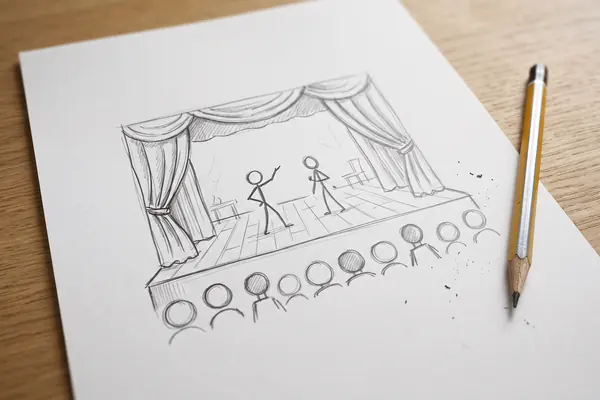
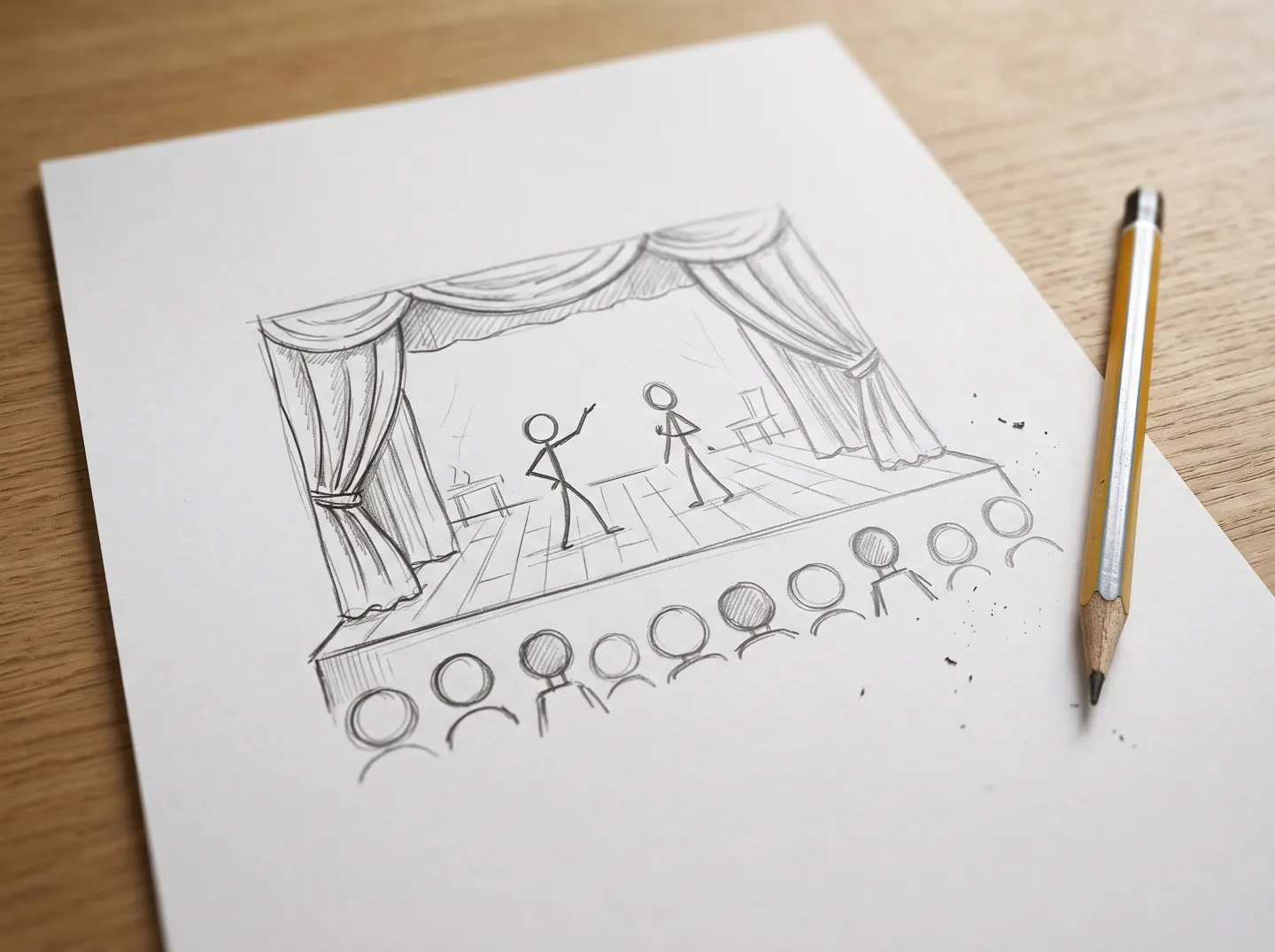
In one study the first drawing of theatre had a stage, curtains, actors and an audience. Early signs work because they look like the thing.
Follow the rounds doodlchat
WHAT THE EXPERIMENTS FOUND
A drawing game is a conversation in pictures.

FEWER LINES same meaning
76% Correct guesses the first time an object was drawn
When researchers asked pairs to communicate only by drawing, round after round, the pictures changed: busy sketches turned into a few quick lines that the partners understood instantly and outsiders often could not.
THE SHORT ANSWER
Psychologists use drawing games as a small model of how signs and words get started.
Three findings come up again and again.
ROUND ONE
In one study the first drawing of theatre had a stage, curtains, actors and an audience. Early signs work because they look like the thing.
Follow the roundsLATER ROUNDS
With feedback from a partner, the drawings got simpler. By game six, theatre was a line and two circles, and the pair still understood it.
See the numbersOUTSIDERS
People who had not taken part found the late, simple signs harder to identify than the early detailed ones. The meaning lives partly in the shared history.
Play it yourselfFOLLOW A DRAWING
Pick a moment in a repeated drawing game. The bar shows how far the drawing has moved from a detailed picture towards a quick shared symbol.
Summarised from published experiments; results describe groups of players in a lab, not any one game.
TRY THE EXPERIMENT AT HOME
You can rerun the basic set-up with a friend. The lab versions banned speech, letters and numbers, so all the meaning had to go into the drawing.
Pick items that are easy to mix up, such as theatre, cinema and concert, so a quick sketch has to be precise. The guesser sees the whole list.
No speaking, letters or numbers. The guesser points to an answer and the drawer sees if it was right.
Go through the same list again, swapping drawer and guesser, for about six rounds.
Put your final drawings in front of someone who did not play, and see how many they can work out.
TWO NUMBERS WORTH KNOWING
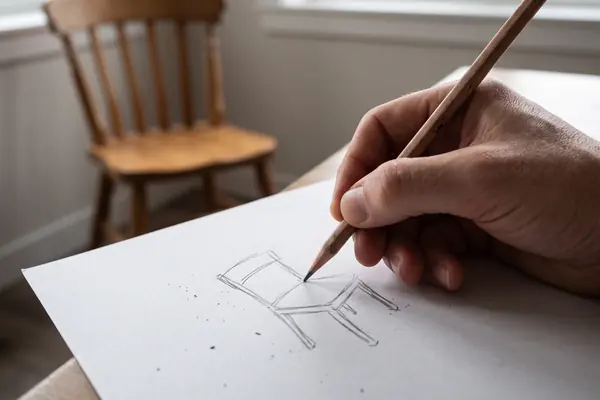
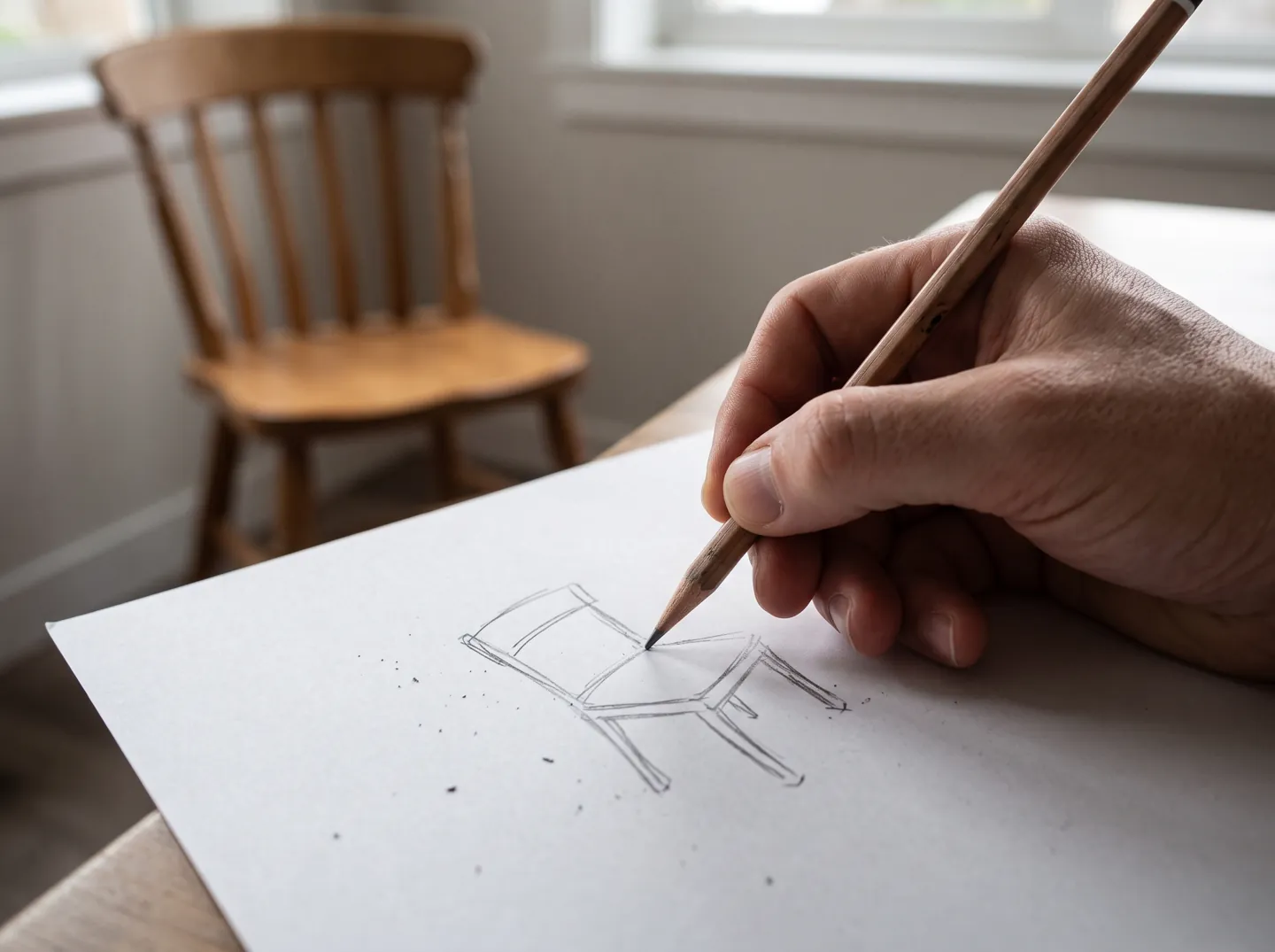
From a drawing game where one person sketched one of four similar chairs
and a partner had to pick it out.
76%
Correct guesses the first time an object was drawn
Chance was 25%, as the guesser chose from four objects. Over repeated rounds, sketchers used fewer strokes and pairs became faster and more accurate.
FIRST DRAWING · HAWKINS ET AL.
88 vs 75%
Accuracy: real partners vs later viewers
Partners in the game were right 88% of the time overall. Later viewers who saw the same pair's drawings in sequence, without taking part, were right 75% of the time.
INSIDERS VS OUTSIDERS · HAWKINS ET AL.
Hawkins and colleagues also found the drawings did not drift into arbitrary scribbles: they kept the visual features that best set the target apart from the others.
WHY RESEARCHERS CARE
Researchers in this field call the shift from look-alike pictures to arbitrary signs symbolisation. Because spoken language leaves no trace of its origins, drawing games give a way to watch something similar happen in an hour.
A 2018 study by Justin Sulik found that guessing early, detailed signs relied more on the creative, insight-style thinking used for puzzles, and that this reliance fell as signs became familiar. Familiarity, not how complex a drawing looked, predicted the change.
Questions
Drawing takes effort, and a partner who has already seen the full picture needs less to recognise it. In the experiments, simplification happened when partners could interact and give feedback.
Not in the studies described by Fay and Ellison. When people drew repeatedly without interacting with a partner, the drawings did not simplify and actually became more complex.
Much of the meaning comes from your shared history with your partner. Experiments found that non-players had more trouble identifying the late, simple signs than the early detailed ones.
In the chair study by Hawkins and colleagues, no. The sketches got sparser but kept the features that best told the target apart from the similar objects beside it.
In 8-person groups where players rotated through every partner, one version of a sign tended to spread until almost everyone used the same refined drawing.
Updated
ABOUT THIS NAME
doodlchat.com is part of the DoodleSale portfolio. It isn't in an auction right now, but you can ask about leasing it.